



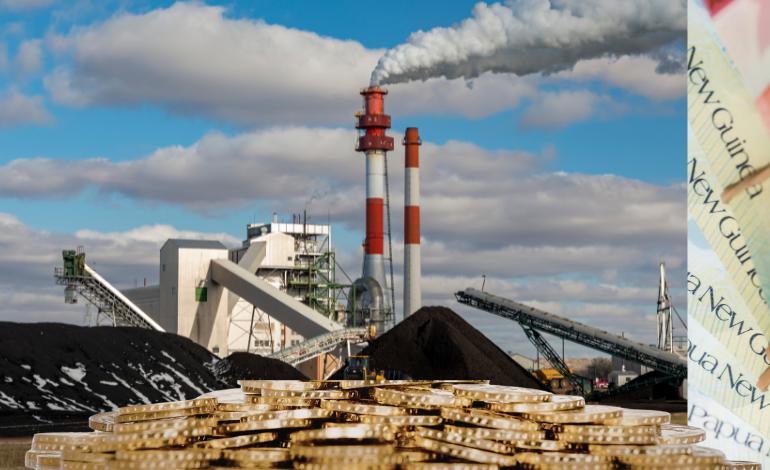
As Papua New Guinea moves closer to a new wave of LNG and mining investment, policymakers are renewing efforts to operationalise the country’s long-awaited Sovereign Wealth Fund, arguing that prudent management of resource revenues will be critical to sustaining economic growth long after the commodities are exhausted.
With several major resource projects moving towards development, the Government is signalling that turning Papua New Guinea’s Sovereign Wealth Fund into an operational institution has become an economic priority rather than a long-term aspiration.
The issue received renewed attention during PNG Resources Week in July, where Sovereign Wealth Fund Chief Technical Adviser Ian Tarutia described the fund as a cornerstone of the country’s economic future. He likened it to a national superannuation fund, designed to convert finite revenues from mining and petroleum into long-term financial assets that can benefit future generations.
The renewed focus comes at an important time. Papua LNG, together with prospective mining developments including Wafi-Golpu and Frieda River, has the potential to generate substantial government revenues over coming decades. Economists have long argued that countries dependent on natural resources need mechanisms to smooth the impact of volatile commodity prices and avoid the boom-and-bust cycles that often accompany resource-dependent economies.
Under proposals outlined during Resources Week, the existing legislative framework would be refined to make the fund commercially workable while strengthening governance, transparency and accountability. A technical review found that earlier funding arrangements were difficult to implement, and recommended a more sustainable contribution model while retaining the fund’s dual objectives of stabilising the economy and building long-term national savings. The proposed framework also adopts internationally recognised Santiago Principles for sovereign wealth fund governance.
For business, the implications extend well beyond public finance. A well-managed Sovereign Wealth Fund can help reduce pressure on government budgets during periods of weaker commodity prices, support macroeconomic stability and provide greater confidence that future resource revenues will be managed transparently. Stable fiscal policy, in turn, creates a more predictable environment for investors considering long-term projects.
International experience offers useful examples. Countries such as Norway, Timor-Leste and Botswana have used sovereign wealth funds to manage resource income, strengthen fiscal resilience and build savings for future generations. PNG’s policymakers hope a similar approach can help ensure that future LNG and mining revenues support sustainable economic development rather than simply financing short-term expenditure.
Progress towards an operational Sovereign Wealth Fund is viewed as another positive step in strengthening the country’s economic institutions. Alongside regulatory reform, improved fiscal management and greater policy certainty, it has the potential to reinforce investor confidence as Papua New Guinea enters its next major investment cycle.


